
A high-performance IT infrastructure starts with passive cabling. Particularly in extensive and security-critical sites such as Bundeswehr barracks, networks must not only operate reliably but also meet demanding requirements for availability, security, scalability and future readiness.
A well-designed cabling concept provides the foundation for this – from the central data centre and individual buildings through to the workplace.
From the Campus Backbone to the Workplace
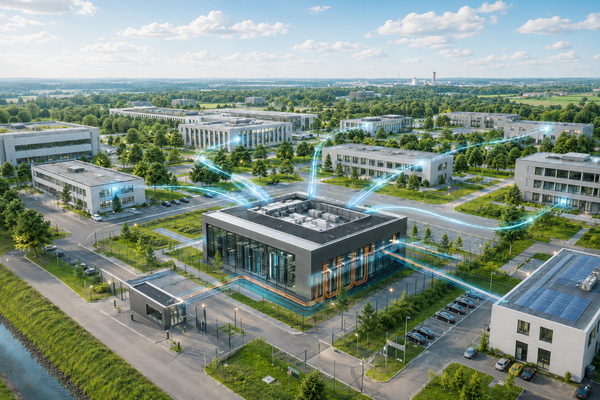
The infrastructure is based on a high-performance fibre-optic campus backbone. Singlemode fibre (OS2) connects the central data centre to the building main distribution frames in a star topology. To ensure a high level of resilience, redundant A/B routes can be implemented using physically separated pathways.
Within the buildings, the structured cabling continues via building and floor distributors through to the individual work and functional areas.
Depending on the requirements, different concepts can be used:
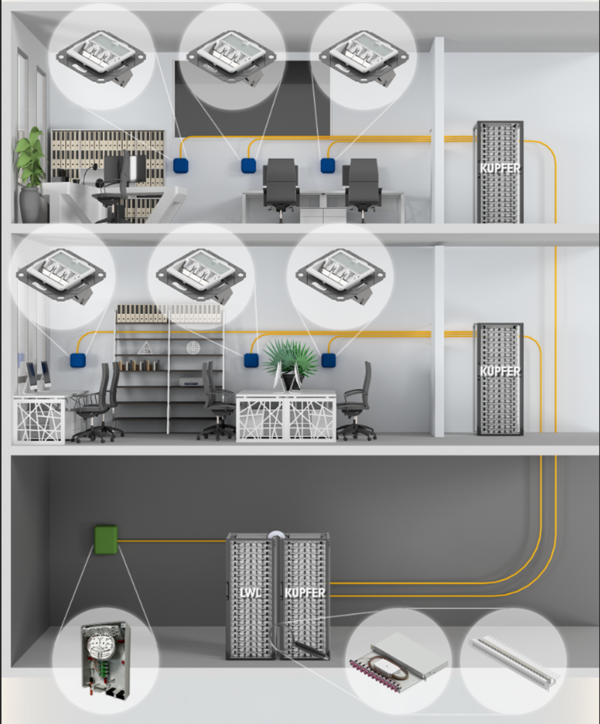
Traditional Structured Cabling
Fibre-optic cabling is used for the secondary cabling within the building, while high-performance Category 6A copper cabling is used in the tertiary area.
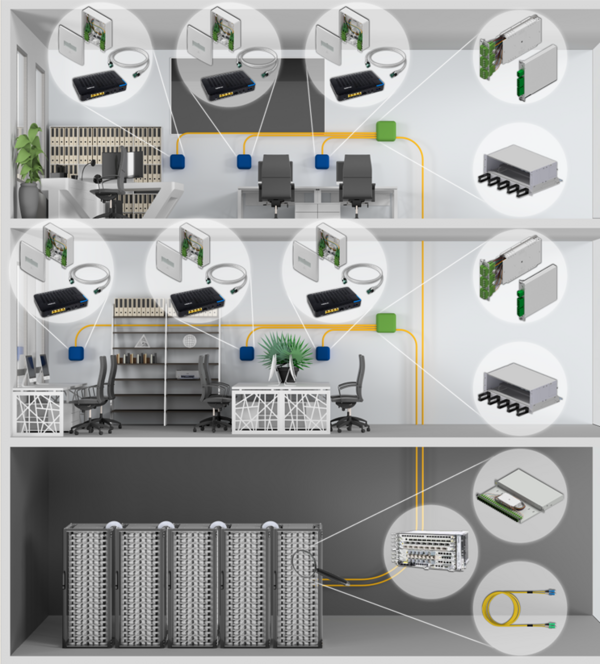
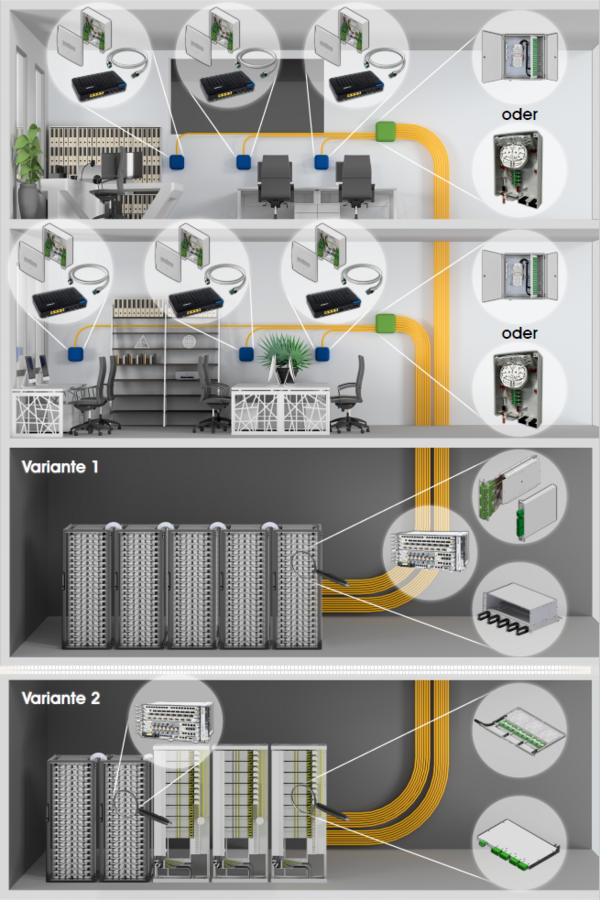
Fibre-Optic Cabling Extending into the User Area
Alternatively, singlemode fibre can be extended further towards the workplace and combined there with local connectivity solutions or microswitches.
This allows the passive infrastructure to be optimally adapted to the size and use of the building as well as to future requirements.
Security Considered from the Outset
At Bundeswehr sites, the physical separation of different networks is particularly important. Separate cable routes and distribution systems enable clear segregation of different services and network areas.
In addition, the concept takes into account, among other things:
shielded copper cabling and corresponding connectivity components
fibre-optic cabling or fully shielded cable routing systems for increased EMC requirements
defined fire protection requirements
clear identification of all components and ports
comprehensive documentation including CAD plans, measurement reports, splice plans and patch lists
This creates a clear and traceable network structure at the passive infrastructure level from the outset.
Redundancy and Capacity Reserves Ensure Future Readiness
Network infrastructures must not only be designed for today’s requirements. Additional applications, increasing bandwidth demands and new technical requirements should already be taken into account during the planning stage.
For this reason, the concept provides for a planning reserve of 40 percent. At the same time, fibre-optic infrastructures and expandable conduit and microduct systems enable flexible extension of the existing infrastructure.
Additional technologies can also be taken into account – for example Fibre to the Desk (FTTD), integration into a building management system, or the supply of cameras, access points and VoIP systems via Power over Ethernet.
Quality Must Be Measurable
A reliable infrastructure does not end with installation. Subsequent testing and documentation are equally important.
For fibre-optic links, for example, visual inspections as well as OTDR or attenuation measurements are provided for. Copper links are certified in accordance with the required transmission class.
Digital measurement reports and transparent documentation create traceability and also provide an important basis for operation, maintenance and future extensions.
Two Approaches – One Goal: a High-Performance Infrastructure
Whether traditional structured copper and fibre-optic cabling or a more fibre-based concept is used, the right network infrastructure always depends on the individual requirements of the respective site.
The key is the combination of high-performance transmission media, clearly structured distribution systems, physical network separation, redundancy and consistent quality control.
A comprehensively planned passive network therefore creates an infrastructure that enables reliable data transmission today while providing sufficient flexibility to meet the requirements of tomorrow.
Are you planning a structured passive network infrastructure for a complex or security-critical site?
ZVK supports you from initial concept development and the selection of suitable copper and fibre-optic solutions through to the implementation of a scalable and future-proof infrastructure.